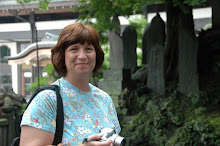
We started the day talking with parents from Katori City. The schools we are visiting are all part of the consolidated city of Katori. The key parts of the discussion were that education reform is in progress and they are working toward smaller class sizes.
The parents felt there has been in increase in discipline problems, especially with bullying. The biggest problem they have is with "cyber bullying". The parents asked if the United States was experiencing similar problems and how were we handling it. We confirmed that internet and cell phones are used for bullying and we too have a difficult time with this problem.
The parents felt that Japanese parents have become too lenient, parents want their children to love them so parents do not scold or punish. They have the impression that American parents are very strict. We discuss this topic at great lengths.
They have similar situations in schools such as budgets being cut and the need for PTA to help fund many programs, such as after school clubs. They also talk about children coming to school without homework done because some parents work long hours and cannot check on whether homework has been completed. We agree this is also a problem in the United States.
We found that our children are very much the same. After school they like to play video games, surf the internet, talk on cell phones, and participate in sports or clubs. The big difference between countries is that Jr. High students attend "cram school" after school. The purpose of this extra tutoring session is to prepare them for the examination they must take to determine which high school they can attend.
The parents talked about the stress of the entrance exam. They feel this is harming their children, but they do not know what to do about it. Students are so over worked and tired during Jr. High. Parents think this makes their children very sad. I would think the pressure would be huge on students ages 12 through 15.
The last thing we talked about was how important it is to keep art, music, and other traditional teachings in the schools. The parents believed it is important for students to not forget about Japan and the unique traditions of the country. The other important thing is for communication between teachers and parents to be improved for the benefit of the student.
Again I am amazed at how the United States and Japan are so similar. We have similar concerns as parents and have the same hopes and dreams for our children.
Tuesday, June 17, 2008

Monday, June 16, 2008
Touring Sawara
 The afternoon was spent touring sites in Sawara. This is a small town with buildings that date back to the 1700s. It was amazing to see the
  old buildings and to think about what the town was like 200 years ago. The town was built along the Ono-gawa canal that conneted to the Tone-gawa river. It was a port town that traded with Edo, now Tokyo. There are many buildings in Sawara that were built with the same building styles of Edo.
 The first stop was the Toukun Shuzo Sake Brewery. The brewery
  reminded me of the winery tours in the states. There were very large holding tanks were the sake fermented. When you first walked in the brewery there was a very strong smell of fermenting rice. We were told the most important part of the process is to use artesian water that was very clear and fresh. The length of time of fermentation determines the proof of the finished alcohol.
The next tour was of a paper mache` mask and doll maker, Miuraya, Sawara-Hariko Handicraft. This man is the third generation of his family to make tradictional masks and dolls. During the
 zodiac year of the rabbit his doll was selected as the mascot. It was also printed on postage stamps. He was very proud to bring fame to Sawara through his work. He did not talk about his own fame. He made a statement that was very powerful..."because I do gentle and warm hearted work I am happy". I think we can all take lessons from this man who lives a very simple, yet fulfilling life.
After getting sweet potato ice cream,it was time to board the bus for our hotel. Yes, sweet potato ice cream! It was soft serve, a soft purple color, and very good.
We arrived at Kashima 40 minutes later. This would be our home until Saturday. The hotel is very nice, but the food expensive in the restuarant. After checking in, we head out looking for a place to eat dinner. We found a restaurant that had plastic models of food that we all thought we would like.
We were seated at two tables because our group was large. The waiter did not speak any English, but tried very hard to help us with our food selections. After eating a wonderful meal with my new "best friends" it was time to return "home" to get some sleep. The hardest part of the restuarant experience is that you cannot tip wait staff that has gone above and beyond to make your dining experience wonderful. No tipping is a costum in Japan. In fact tipping is considered rude because what you have already paid for the service covers the staff. A very hard rule for Americans to follow.
Another full day exploring life in Japan.
Chiba University
This morning we visited Chiba University in Chiba City. This university has strong programs in medicine, engineering, agriculture, and teacher preperation. The faculty described the educational programs at the school and then there was a question and answer session.
There was a discussion about changing values in society. The Japanese have always believed that the sun and nature are watching so it is important to not due anything bad. Today this is not so easily believed by young people and causing values of right and wrong to change. As a result moral education was added to teaching guidelines when they were revised in March, 2008. These guidelines will be reviewed again in 10 years.
The second part of the Chiba University visit was to talk with college students. This was my favorite part. I chatted with two young women about college, food, and what they wanted to do when they graduated. A young man joined our group. He is planning to be a high school English teacher when he finishes at the university.
He asked me when we teach students to write his or her opinions, when do we teach creative writing? I explained that is taught very early in elementary school. He told me Japanese students are not taught to write creatively, they do not write their opinions, only factual information. He feels there is a problem with people being able to express his or her opinion. This is very interesting. I responded that American students have too many opinions and have a difficult time writing essays containing factual information. He though that was very funny.
We were only given an hour to meet with the college students and the time passed quickly. Before we new it, it was time to go.
There was a discussion about changing values in society. The Japanese have always believed that the sun and nature are watching so it is important to not due anything bad. Today this is not so easily believed by young people and causing values of right and wrong to change. As a result moral education was added to teaching guidelines when they were revised in March, 2008. These guidelines will be reviewed again in 10 years.
The second part of the Chiba University visit was to talk with college students. This was my favorite part. I chatted with two young women about college, food, and what they wanted to do when they graduated. A young man joined our group. He is planning to be a high school English teacher when he finishes at the university.
He asked me when we teach students to write his or her opinions, when do we teach creative writing? I explained that is taught very early in elementary school. He told me Japanese students are not taught to write creatively, they do not write their opinions, only factual information. He feels there is a problem with people being able to express his or her opinion. This is very interesting. I responded that American students have too many opinions and have a difficult time writing essays containing factual information. He though that was very funny.
We were only given an hour to meet with the college students and the time passed quickly. Before we new it, it was time to go.
Sunday, June 15, 2008
Travel Day. And what a travel day it was!
Today we traveled to Chiba City, which is across Tokyo Bay from Tokyo.
 When we looked out the window we could see men sweeping the street with small brooms. Even a monk stopped to help clean the glass off the street. I was surprised cars continued to move through the intersection, no one stopped traffic.
 The last interesting experience for the day was wandering around a shopping area. We stopped to listen to some young street musicians and watch teenage girls giggle at them. We purchased there CD for 500 yen ($5). The girls insisted we wait and have the two guys sign it. The guys were very flattered when they signed our CDs and handed them back we gave them each a business card (maishi). The looked at us in surprise and said "sensai?" (teacher?). It made me miss teenagers from the states.
I started the day by going for a walk with Elise, a member of our group. We had a very refreshing walk. In the process we found a quiet neighborhood with some really nice supermarkets. Exploring supermarkets would become one of our favorite past times. It is amazing the different foods and products you can find. We decided to purchase sushi and drinks for the bus ride. It would be a picnic on wheels, while we did some sightseeing on our way to Chiba City.

When we arrived back at the hotel the Akasaka Shrine was having a festival in the hotal parking lot. The festival consisted of a parade with people in traditional costumes carrying an object that appeared to look like an alter. Not being familar with the costums I cannot explain the festival very well. It was very interesting to watch and makes me want to learn more.
We boarded the bus at noon, as scheduled, and were off. A little while later we were enjoying our picnic and chatting when all of a sudden the bus swerved and stopped. I looked up and our guide was flying forward, down the steps, and hit her face off the dash. 

What had happened? There was all kinds of chatter and then we realized we had hit a car while coming through the intersection. We looked out the back window and could see the car crashed into a gaurdrail. The bus had hit the car, the car had spun around and hit a truck, then the car spun again and hit the gaurdrail. The driver and passenger were helped out of the car by some men. At the same time, I went up and checked on our guide. She said she was fine, obviously shaken, then immediately started making phone calls. She is one very tough lady.
 When we looked out the window we could see men sweeping the street with small brooms. Even a monk stopped to help clean the glass off the street. I was surprised cars continued to move through the intersection, no one stopped traffic.
The EMS arrived very quickly. They checked on the people in the car, then checked on us in the bus. They had a card that stated in English "does it hurt here" and then they would point to body locations on the pictures. It was a very good way to communicate. You could tell they had delt with foriegn patients before. They were very professional. I was amazed how small the ambulance was. The EMTs had a backpack on that looked to contain medical supplies. That would be very handy.
Luckily no one was seriously hurt. We were taken to our hotel by taxi. Then went about our trip as if it was just another day. 
We went out to dinner in a large group. We decided to go to a sushi restuarant. The shushi traveled in front of the counter on a track. You picked the plate you wanted. When you were finished the wait staff calculated your bill be adding up how many plates you have. There are so many costums that are based on the honor system. I always wonder if it would work in the U.S. this way.
The interesting part of this sushi trip was eating whale. Yes, it was whale! The meet was very dark and marbled much like beef. It had a very firm texture and did not taste like fish. Very interesting to the palette.
 The last interesting experience for the day was wandering around a shopping area. We stopped to listen to some young street musicians and watch teenage girls giggle at them. We purchased there CD for 500 yen ($5). The girls insisted we wait and have the two guys sign it. The guys were very flattered when they signed our CDs and handed them back we gave them each a business card (maishi). The looked at us in surprise and said "sensai?" (teacher?). It made me miss teenagers from the states.
 Another day of adventure. What will tomorrow bring?
Saturday, June 14, 2008
Fugi-san, Lake Ashi, and Mt. Komagatake
Today was our scheduled free day. This is the only day we are totally in control of our schedule for the entire day. I decided to go to Fugi-san. It was very difficult to decide what to do. I thought and thought about it for days. People were planning all kinds of trips and emailing for the group to come along. There were trips planned to Hiroshima, 4 hours on the bullet train and around 400 yen, Kyoto, two hours on bullet train and around 260 yen, Kamakura, very close and high on my list, stay in Tokyo to explore, not an option I need to see more of Japan.
 On our way back down the mountain the clouds started to clear. We convinced the guide to pull over the bus so we could get out and take pictures. By the time we stopped the clouds had returned. We stood on the side of the road for a while trying to talk the clouds into leaving. Finally it was possible to take a few quick photos of the summit before the clouds covered the snowcapped peaks.

 Then we went for an aerial tramway ride up the side of Mt. Komagatake. This is the central volcanic cone of the Hakone range and rise 1,327 meters above sea level. The tramway is 1,800 meter long ride that take 7 minutes. The view from the top was unbelievable. We did not get a good view of Mr. Fugi because of the clouds.

The last part of our journey was riding back to Tokyo on the Shinkansen bullet train. The ride was a gentle sway back and forth. When you looked out the window it did not seem like you were traveling at almost 200 km/hr.
When the trip to Fugi-san was mentioned I knew right away this was the trip. I really wanted to see Fugi-san and I wanted to travel through the Japanese countryside. I would get to do both.
The bus picked us up at the hotel at 8 a.m. There were about 20 of us that had chosen this trip. This bus was filled with JFMF teachers and other tourists with the same objective. Very  interesting because not everyone was from the United States, but we all had the same objective. We got stuck in a traffic jam trying to leave Tokyo. This put us behind schedule and we were unable to stop at the Mt. Fugi visitors center. We did stop at a restaurant where we could see Mt. Fugi and eat our Japanese style box lunch. Then we were off again to head up the mountain.
 interesting because not everyone was from the United States, but we all had the same objective. We got stuck in a traffic jam trying to leave Tokyo. This put us behind schedule and we were unable to stop at the Mt. Fugi visitors center. We did stop at a restaurant where we could see Mt. Fugi and eat our Japanese style box lunch. Then we were off again to head up the mountain.
We were able to travel to the 5th station. It is closed above the 5th station until July and then  closes again in October. After hours of driving we finally reached our destination. We had 25 minutes to look at Fugi-san and visit the gift shop. Not much time and I had to go to the restroom. I decided this was the place to finally attemp to us the Japanese style trough toilets. I was surprised it was not that difficult.
 closes again in October. After hours of driving we finally reached our destination. We had 25 minutes to look at Fugi-san and visit the gift shop. Not much time and I had to go to the restroom. I decided this was the place to finally attemp to us the Japanese style trough toilets. I was surprised it was not that difficult.
  On our way back down the mountain the clouds started to clear. We convinced the guide to pull over the bus so we could get out and take pictures. By the time we stopped the clouds had returned. We stood on the side of the road for a while trying to talk the clouds into leaving. Finally it was possible to take a few quick photos of the summit before the clouds covered the snowcapped peaks.
Our next stop was a boat ride across Lake Ashi. This was a refreshing ride with the wind blowing through our hair and a wonderful view of the mountains around us.
 Then we went for an aerial tramway ride up the side of Mt. Komagatake. This is the central volcanic cone of the Hakone range and rise 1,327 meters above sea level. The tramway is 1,800 meter long ride that take 7 minutes. The view from the top was unbelievable. We did not get a good view of Mr. Fugi because of the clouds.
The last part of our journey was riding back to Tokyo on the Shinkansen bullet train. The ride was a gentle sway back and forth. When you looked out the window it did not seem like you were traveling at almost 200 km/hr.
Back to the hotel to pack. Tomorrow we leave for Chiba City and Monday we continue on to Katori City. I am leaving 1 bag in Tokyo full of items I have purchased and dirty laundry. I also found out that an earthquake hit 2 hours away from Tokyo that measured 7.1 on the richtor scale at 8:30 this morning. At the time we were on a bus stuck in traffic. I didn't feel a thing.
Friday, June 13, 2008
Peace Education and Kabuki
Today we were allowed to pick what workshop we wanted to attend. I selected "Peace Education" with a focus on the dropping of the atomic bombs on Hiroshima on August 6, 1945 and Nagasaki on August 9, 1945. This is a topic discussed in my Social Studies classes and felt it would be a very good session to attend. I had no idea a survivor would be speaking with us. This was a very powerful session.


First Tomoko Yanagi spoke about her father's story. He was 14 years old and 5 miles away from the hypocenter in Hiroshima. He survived, but many of his family and friends did not. Yanagi spoke of the 400,000 people who lost their lives within 1 year of the bomb being dropped. She also talked about how the people of Korea saw dropping the bomb on Japan as a good action. The result was ending Japanese occupation of Korea when World War II was over. These were two facts I had never really though about, especially the ending of occupation of Korea after the war.
Next Keijiro Matsushima spoke to the room full of teachers. He was 16 years old then the bomb was dropped on Hiroshima. He was lucky that day. Students were urged to go back to school on August 1. During the war many students worked in factories instead of going to school. He chose to go back to school. This was just 6 days before the bomb was dropped.
The school was on the edge of Hiroshima. The bomb was dropped on an area of the city that had a large number of factories. Anything 1 to 3 miles from the hypocenter did not survive. He has always considered himself very lucky. Matsushima stated that people are "angry at the A-bomb, not at the people of the United States". This is a very strong statement symbolizing how we must live in peace and to forgive our enemies for the benefit all of people.
Why was the bomb so effective? Geography had a hub impact. Hiroshima is surrounded by mountains. This kept the radiation concentrated in the area where the bomb was dropped. However people returned to hiroshima within days of the bombing. A street car ran just 2 days after the bombing in a distant part of the city. Plants were growing again by the next summer. It took 10 years to rebuild the city.
Hiroshima Peace Memorial Museum and Park is located on the site the bomb was dropped. It is to remember the people who have lost their lives on the fateful day, but also to celebrate peace. A virtual tour of the site can be found at http://www.pcf.city.hiroshima.jp/ . I highly recommend viewing this site.
Learning about Hiroshima and Nagasaki will change the way you think about war, peace, and nuclear weapons. My thoughts have changed after listening to Keijiro Matsushima and Tomoko Yanagi.
Kabuki
The afternoon was spent learning about traditional Japanese theater called Kabuki presented by  Mark Oshima. This type of theater only has adult male performers, even the female parts are played by males. Kabuki dates back to the Edo Period (1603-1868). Live Kabuki theater is still very popular in Japan today. The themes are very complex, often having to do with historical disputes or love suicides. Kabuki theater is not intended for children as some of the topics are a little mature.
 Mark Oshima. This type of theater only has adult male performers, even the female parts are played by males. Kabuki dates back to the Edo Period (1603-1868). Live Kabuki theater is still very popular in Japan today. The themes are very complex, often having to do with historical disputes or love suicides. Kabuki theater is not intended for children as some of the topics are a little mature.
We also had a presentation on classical Japanese dance which started in what is considered the Modern Period (1868-present). Much of the modern music took on Western culture. Many music pieces were military marches, melodies and harmonies, or music for entertainment. We were honored with a dance presentation with music from the Modern Period. 

The Sumo Hunt!
Today was one of the best days in Japan so far. We started out early, 5 a.m., to look for sumo wrestlers. We had no idea when we left the hotel if we would be successful or not. We started out giving an address to the cab driver. We wanted him to take us to a neighborhood where we thought sumo stables were located. One member of our group of three found the address on the internet. We didn't care if it was acurate or not, it was a place to start.
The cab took us to where he thought the address was. Japanese addresses are very difficult because they do not exactly follow any ordered pattern. We got out of our cab and the hunt began. We wondered around the neighborhoods. It was interesting. We came across a park for dogs to play in. Then we found a park with senior citizens exercising. They invited us to join them with a motion of their hand and a smile. We politely declined with a smile and a wave.
Then we found one! A man dressed in a yukato walking down the street. We knew he must be a wrestler. We followed him for a while, then lost the sumo trail again. Next we decided to go to the Sumo Museum and stadium. The security gaurds did not speak English, so they were of no assistance. Then we ran into an American man who lived in Tokyo. He was very happy to direct us down the street a few blocks. Very weird to be given directions in English. So off we went.
He was exactly right. We found a sumo stable where practice was taking place. We asked a young wrestler if we could come in and watch. He went inside and returned to motion us into the practice room.
It was amazing. We sat perfectly still for 45 minutes. I was mesmerized! Then we had to go because we had a meeting at 9:30 and needed to shower yet. No, I didn't want to leave! This was absolutley awesome. They were young wrestlers and not very big, but still sumo guys anyway. I couldn't resist on our way out of the stable to ask a young wrestler if I could take a picture with him. Who knows maybe some day he will be a champion. One item marked off my "Japan bucket list".


The cab took us to where he thought the address was. Japanese addresses are very difficult because they do not exactly follow any ordered pattern. We got out of our cab and the hunt began. We wondered around the neighborhoods. It was interesting. We came across a park for dogs to play in. Then we found a park with senior citizens exercising. They invited us to join them with a motion of their hand and a smile. We politely declined with a smile and a wave.
Then we found one! A man dressed in a yukato walking down the street. We knew he must be a
 wrestler. We followed him for a while, then lost the sumo trail again. Next we decided to go to the Sumo Museum and stadium. The security gaurds did not speak English, so they were of no assistance. Then we ran into an American man who lived in Tokyo. He was very happy to direct us down the street a few blocks. Very weird to be given directions in English. So off we went.
He was exactly right. We found a sumo stable where practice was taking place. We asked a young wrestler if we could come in and watch. He went inside and returned to motion us into the practice room.
It was amazing. We sat perfectly still for 45 minutes. I was mesmerized! Then we had to go because we had a meeting at 9:30 and needed to shower yet. No, I didn't want to leave! This was absolutley awesome. They were young wrestlers and not very big, but still sumo guys anyway. I couldn't resist on our way out of the stable to ask a young wrestler if I could take a picture with him. Who knows maybe some day he will be a champion. One item marked off my "Japan bucket list".


Subscribe to:
Posts (Atom)